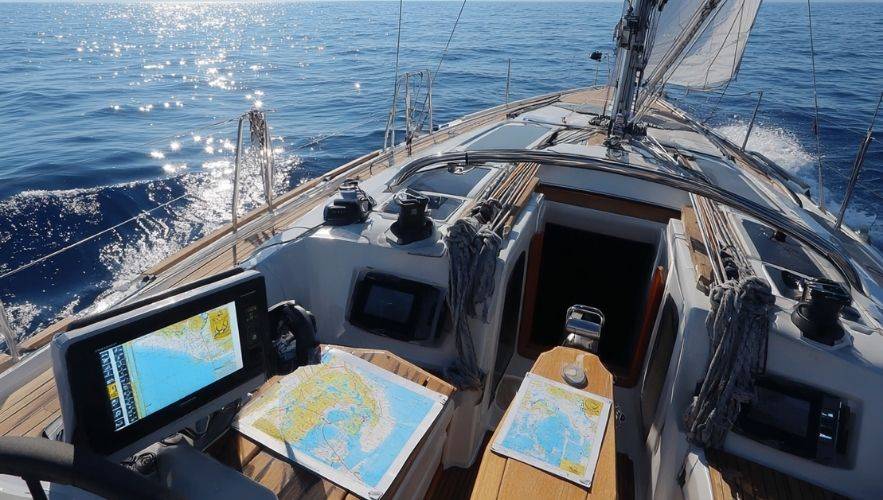
Navigation is one of the most important foundations of seamanship, and it’s a core skill emphasized in every training program at Miami Sailing School™. Whether you’re preparing for certification, exploring Biscayne Bay, or planning longer passages, understanding sailing navigation basics ensures you always know where you are, where you’re going, and how to get there safely. Modern GPS for sailboats has made navigation more accessible than ever, but traditional skills—like reading charts and dead reckoning—remain essential for confidence and safety on the water.
This guide breaks down the fundamentals of charts, GPS systems, and dead reckoning so sailors of all experience levels can build a solid foundation. Combined with professional instruction at Miami Sailing School™ and authoritative resources from the American Sailing Association , World Sailing, and US Sailing , these skills give sailors the awareness and independence they need to navigate effectively.
Why Navigation Skills Matter for Every Sailor
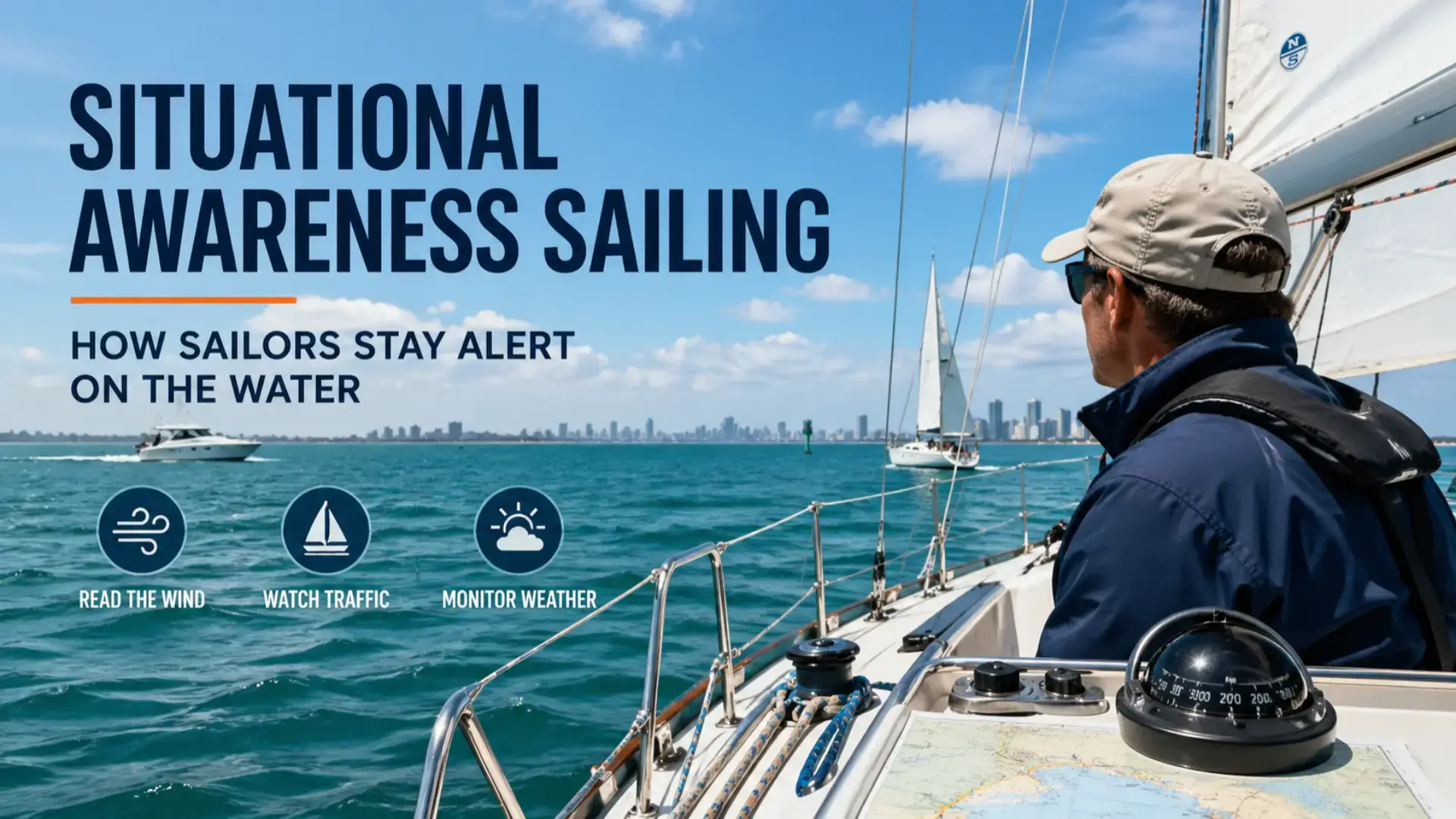
Navigation is more than plotting a line on a map. It affects nearly every decision on the water. Even with multiple electronic tools on board, a strong understanding of sailing navigation basics makes sailors safer, better prepared, and more confident—especially when conditions change suddenly.
Miami Sailing School™ teaches that good navigation habits help sailors:
- Understand their surroundings
- Recognize hazards long before they appear
- Manage low visibility or deteriorating weather
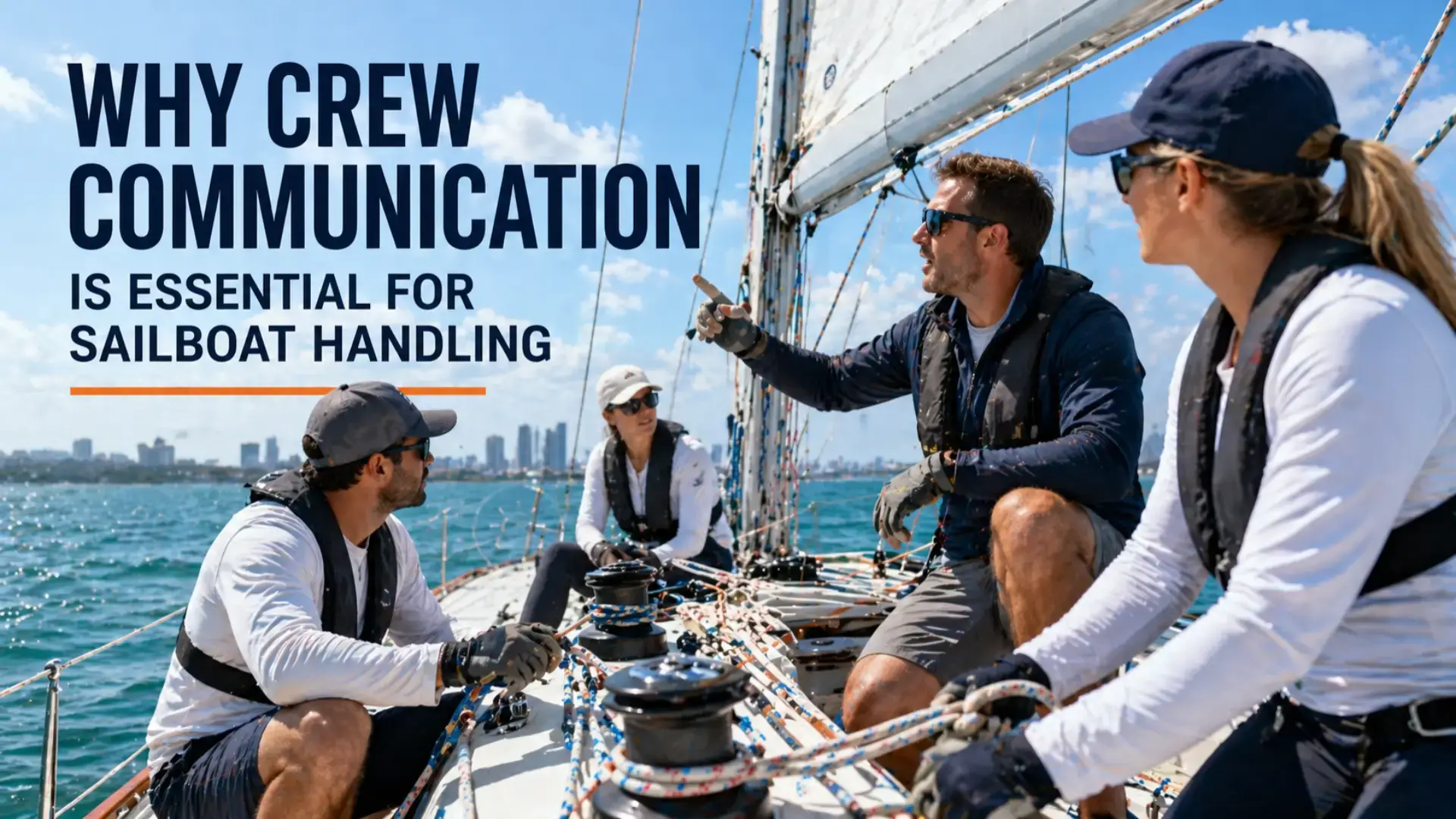
- Communicate clearly with crew
- Plan safer, more efficient routes
While GPS for sailboats has become standard equipment, Miami Sailing School™ emphasizes that sailors must never rely exclusively on electronics. Power losses, antenna failures, grounding issues, or fog can quickly highlight the limits of digital navigation tools. That’s why strong foundational skills—like chart reading and dead reckoning—remain essential.
Trusted national resources such as NOAA and the U.S. Coast Guard complement Miami Sailing School™ training by providing up-to-date charts, safety notices, and navigation standards.
Understanding Charts: The Foundation of Sailing Navigation Basics
Nautical charts are the backbone of all traditional and modern navigation. Miami Sailing School™ trains every student to interpret charts confidently, because digital navigation tools often rely on the same chart data.
How to Read a Nautical Chart
Nautical charts represent depth, hazards, underwater obstructions, channels, and navigation aids. New sailors learn how to identify depth contours, interpret color coding (light blues for shallow areas, white for deep water), and recognize symbols indicating rocks, sandbars, reefs, or wrecks.
Latitude and longitude lines allow sailors to pinpoint exact positions and plot bearings. Miami Sailing School™ gives students real-world opportunities to match chart information with visual cues on the water, reinforcing situational awareness and accuracy.
Plotting Courses and Bearings
Plotting a course involves connecting two or more waypoints on a chart, then using a parallel ruler or plotter to determine the heading. Distances are measured using the chart’s scale, and sailors calculate travel time using their vessel’s average speed.
Even when using GPS for sailboats, plotting manually helps sailors understand the relationship between course, wind, current, and timing—skills emphasized throughout Miami Sailing School™’s navigation curriculum.
Aids to Navigation
Buoys, markers, beacons, and lights appear on charts precisely as they appear on the water. Recognizing these aids helps sailors confirm their location and verify GPS accuracy.
Standards for aids to navigation follow guidelines maintained by the U.S. Coast Guard. Miami Sailing School™ students learn to cross-reference chart symbols with real-world markers during on-water sessions.
GPS for Sailboats: Convenience with Important Limits
Modern GPS has transformed sailing navigation by offering fast, precise, real-time data. Miami Sailing School™ integrates GPS instruction into navigation courses so sailors understand both its strengths and its limitations.
Why GPS Is Helpful for Sailors
GPS for sailboats provides:
- Instant latitude and longitude
- Course over ground
- Speed over ground
- Distance to waypoints
- Turn-by-turn route guidance
- Alarms for depth, hazards, and proximity
These tools greatly reduce workload during longer passages and help sailors stay aware of surrounding hazards.
Key GPS Features Every Sailor Should Understand
Even sailors relying on smartphone apps benefit from learning the fundamentals of a dedicated marine GPS. Miami Sailing School™ ensures students can operate:
- Waypoints, which mark important locations
- Routes, which connect multiple waypoints
- Tracks, which show where you’ve been
- Alarms, including anchor drag, depth, or off-course alerts
- Chart layers, displaying depth and hazard data
Understanding these features is a core component of sailing navigation basics.
Why GPS Should Never Replace Traditional Skills
Electronics rely on power, satellite visibility, and functioning hardware. Failures may be rare, but sailors must always be prepared. Miami Sailing School™ stresses that GPS should enhance—not replace—traditional methods. That’s where dead reckoning becomes crucial.
Dead Reckoning: The Timeless Skill Every Navigator Needs
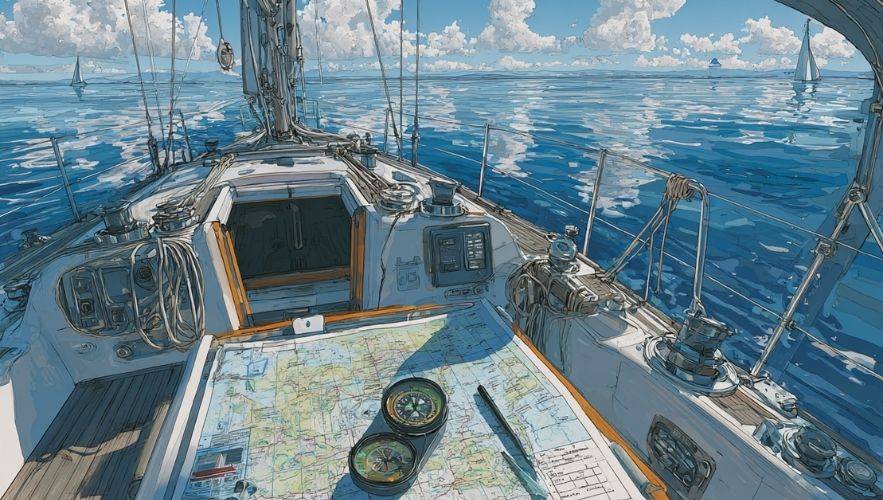
Dead reckoning is the practice of estimating your position based on your last known point, your heading, your speed, and the time traveled. Long before GPS for sailboats existed, this was how sailors found their way at sea. Miami Sailing School™ continues to teach dead reckoning because it builds strong, resilient navigation habits.
How Dead Reckoning Works
The formula is simple:
Distance = Speed × Time
But applying dead reckoning requires awareness of wind, current, and drift. Students at Miami Sailing School™ practice adjusting their estimated position based on real-world conditions, helping them strengthen predictive navigation skills.
Why Dead Reckoning Still Matters
Dead reckoning:
- Provides a backup when electronics fail
- Forces sailors to track time, speed, and heading consistently
- Enhances understanding of how environmental factors affect the vessel
- Builds confidence in open water
It’s a core element of sailing navigation basics and a practical tool used by seasoned sailors worldwide.
Combining Navigation Methods for Accuracy and Safety
The strongest sailors—and the best students at Miami Sailing School™—use a blend of all navigation tools. Relying solely on one method can lead to mistakes or unsafe situations.
How to Integrate Charts, GPS, and Dead Reckoning
- Begin every voyage with a chart-based plan.
- Enter key waypoints into your GPS for sailboats.
- Use GPS to track progress but confirm position with visual cues and charted markers.
- Maintain a navigation log including headings, times, and observations.
- Use dead reckoning between electronic position checks.
- Monitor NOAA forecasts at https://www.weather.gov/ for any changes.
This hybrid approach gives sailors the highest level of accuracy, awareness, and safety.
Building Navigation Confidence With Miami Sailing School™
Mastering sailing navigation basics requires practice, repetition, and hands-on instruction. Miami Sailing School™ trains sailors in real conditions, using real charts, real instruments, and real-time decision-making scenarios. Students learn how to interpret charts, plan routes, verify position, operate GPS for sailboats, and perform dead reckoning on the water.
External authorities such as ASA (https://asa.com/), World Sailing (https://www.sailing.org/), and US Sailing (https://www.ussailing.org/) reinforce the standards Miami Sailing School™ incorporates into every navigation lesson. But the most powerful navigation training comes from applying these skills in Miami’s dynamic coastal waters with expert instructors guiding each step.
Miami Sailing School™ ensures every student develops the confidence and capability needed to navigate independently, safely, and skillfully—no matter the destination.
Additional Resources
FAQs: Sailing Navigation Basics
Yes. GPS for sailboats is a powerful tool, but electronics can fail. Miami Sailing School™ teaches both chart reading and digital navigation to ensure sailors are fully prepared.
Beginners should understand chart symbols, latitude and longitude, aids to navigation, course plotting, and dead reckoning. These fundamentals form the backbone of all navigation training at Miami Sailing School™.
GPS is extremely accurate, but it cannot replace situational awareness or manual plotting skills. Miami Sailing School™ trains sailors to use GPS alongside traditional techniques for maximum safety.
Dead reckoning should be practiced regularly so it becomes instinctive. Navigation courses at Miami Sailing School™ integrate it into every on-water navigation session.