
Docking And Mooring Techniques
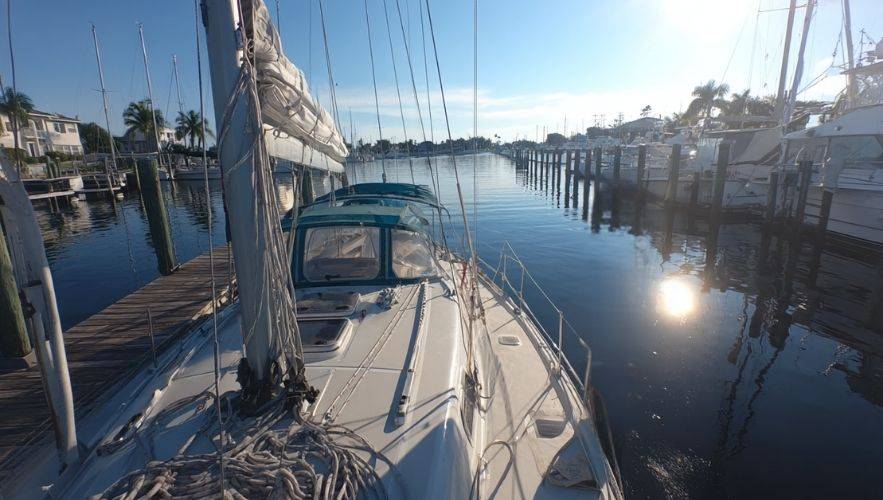
Docking and mooring are among the most important skills any sailor can develop, and they are foundational components of every training program at Miami Sailing School™. These maneuvers require precision, awareness, and confidence — especially in a place like Miami, where busy marinas, shifting winds, and active boating traffic demand strong boat-handling abilities.
Whether you’re new to sailing or refining your seamanship, understanding docking a sailboat and learning safe, reliable mooring techniques will transform your comfort and safety on the water. Miami Sailing School™ teaches these methods hands-on because they directly impact your overall success and confidence as a sailor.
Why Docking and Mooring Skills Matter for Every Level of Sailor
At Miami Sailing School™, we continually emphasize that docking and mooring are not “advanced” skills — they are essential from day one. These are the moments when sailors must rely on judgement, communication, and technique rather than the freedom of open-water sailing. A well-handled docking or mooring maneuver builds confidence, while a poor one can lead to damage or unsafe situations.
Strengthening these skills through Miami Sailing School™’s training builds:
- Better low-speed boat handling
- Increased spatial awareness
- Stronger communication habits
- Safe marina arrivals and departures
- Improved decision-making under pressure
Major standards organizations such as the American Sailing Association, World Sailing, and US Sailing reinforce these same fundamentals — and Miami Sailing School™ integrates them directly into local, real-world instruction on the water.
Understanding How Your Sailboat Behaves in Tight Spaces
Wind, Current, and Prop Walk: Core Principles Taught at Miami Sailing School™
One of the first lessons students learn at Miami Sailing School™ is that a sailboat behaves very differently at slow speeds than under sail. Steering relies entirely on water flowing over the rudder, meaning extremely slow movement decreases control. Short, controlled bursts of throttle create the steering response needed to maneuver safely.
Wind and current have outsized influence in marinas, especially in Miami’s coastal waterways. Miami Sailing School™ instructors train students to recognize how the bow or stern reacts to these forces and how to compensate using throttle, rudder, or line placement.
Prop walk — the sideways pull of the stern in reverse — is another factor heavily covered during Miami Sailing School™’s docking curriculum. Understanding which direction your vessel naturally swings is crucial for predictable and safe close-quarters maneuvering.
Speed, Awareness, and Judgement
A guiding rule repeated often in Miami Sailing School™ courses is simple: move “no faster than you’re willing to make contact.” Thoughtful, controlled motion gives sailors more reaction time and reduces stress.
Before approaching a slip or mooring ball, students at Miami Sailing School™ learn to pause, observe, and analyze the environment. Awareness of wind shifts, current patterns, and nearby boat movements leads to smoother, safer approaches.
Fundamental Techniques for Docking a Sailboat
Approach Angles and Preparation
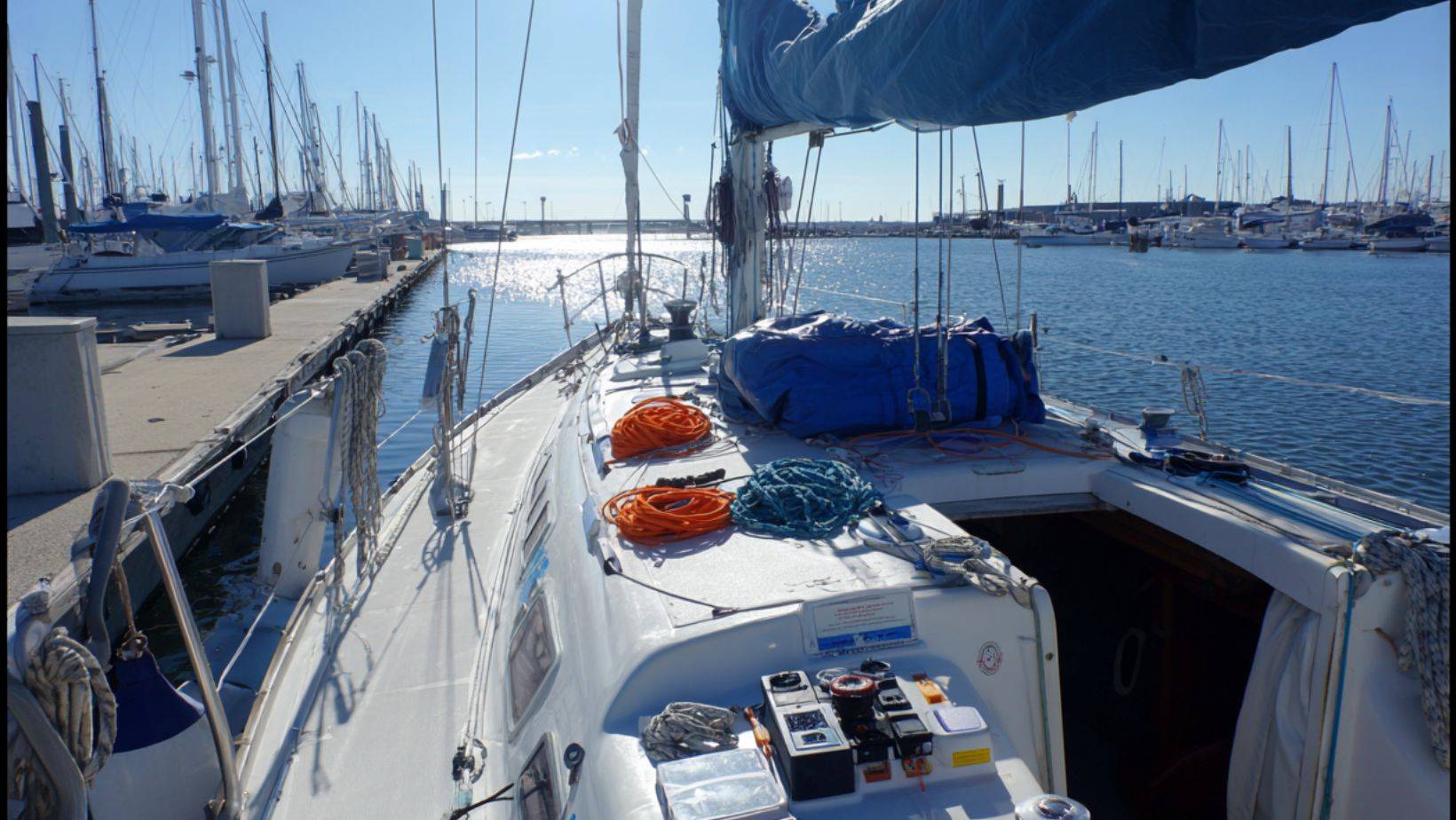
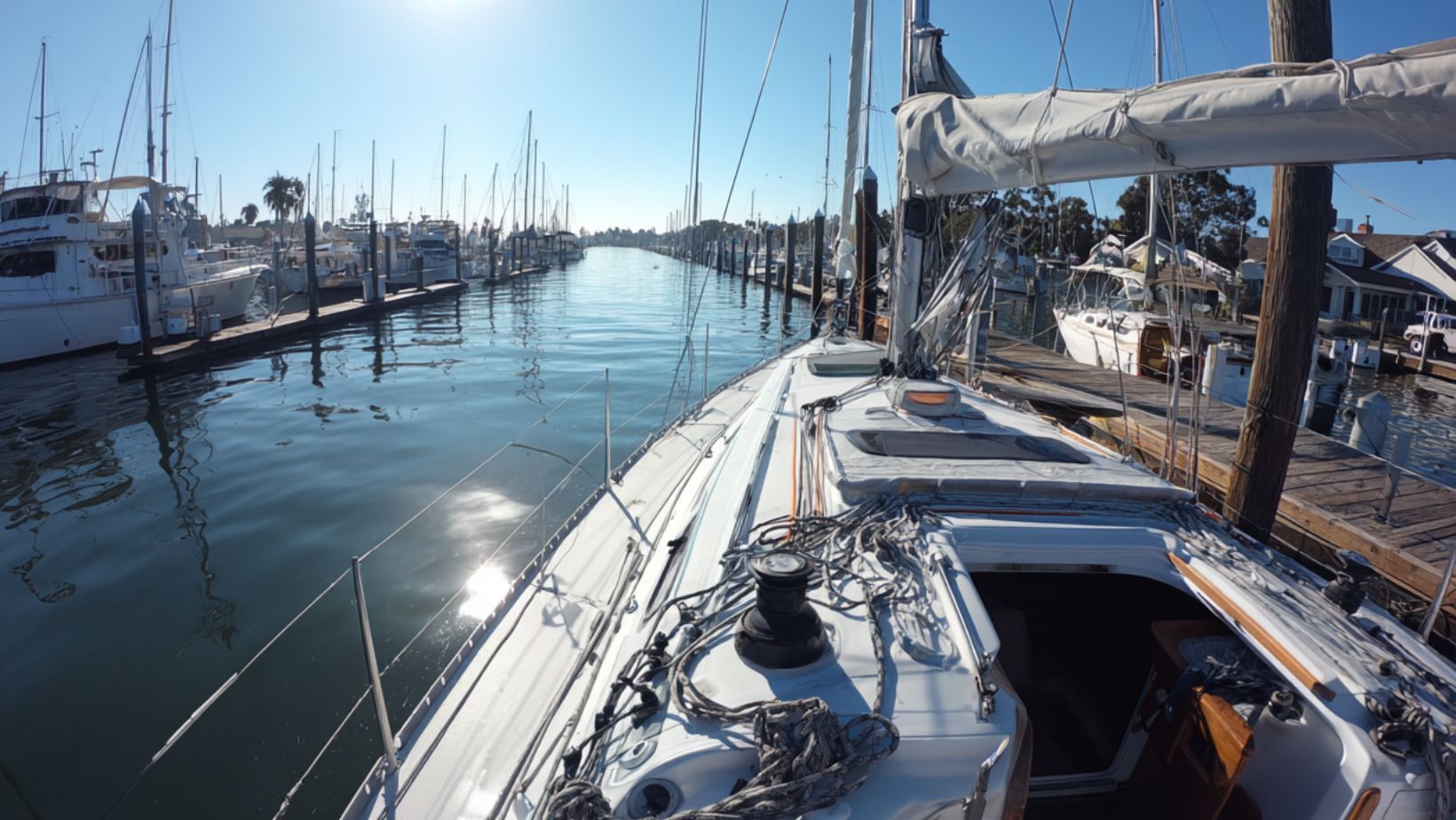
Every docking maneuver at Miami Sailing School™ begins with planning and communication. Before advancing toward the dock, students review crew roles, line handling, fender placement, and the expected approach angle. A shallow approach — around 20 to 30 degrees — allows for controlled pivoting without risking a bow strike.
This structured preparation is a hallmark of Miami Sailing School™’s teaching philosophy.
Throttle, Rudder, and Control
When docking a sailboat, Miami Sailing School™ instructors emphasize the use of short bursts of throttle to improve rudder authority. This approach ensures the boat responds predictably and prevents the uncontrolled drift that continuous slow idle can cause.
Once aligned with the dock, shifting to neutral maintains control and prevents accidental acceleration.
Using Wind Strategically
Wind can be either your greatest challenge or your biggest advantage. Students learn how to dock with the wind pushing them toward the dock — which can simplify the maneuver — as well as how to compensate when the wind pushes them away. Miami Sailing School™ trains sailors to anticipate these effects long before the boat reaches the slip.
A well-timed bow line handoff, a light burst of throttle, or a slight correction in angle often makes the difference between a stressful attempt and a smooth docking.
Communication and Safe Line Handling
Miami Sailing School™ trains crews to communicate clearly and calmly, eliminating confusion during critical moments. Line handlers are taught exactly when — and when not — to step ashore, ensuring safety is never compromised.
Core Mooring Techniques Every Sailor Should Master
Controlled Approaches to a Mooring Ball
Approaching a mooring ball is one of the most important mooring techniques taught at Miami Sailing School™. The correct method is to approach slowly from downwind, allowing the vessel to stabilize as it heads directly into the breeze. This approach gives the helm maximum control and creates a predictable motion.
Students practice idle-speed approaches, timing, and communication between helm and bow crew until the movements become natural and consistent.
Retrieving and Securing the Pendant
Once the mooring ball is within reach, Miami Sailing School™ teaches sailors how to retrieve the pendant smoothly with a boat hook, secure it to a bow cleat, and verify that it is properly aligned and free of chafe.
Using a secondary line or bridle is a technique often taught in advanced classes at Miami Sailing School™, helping reduce strain during windy or choppy conditions.
Safety Checks After Securing
After the boat settles back into the wind, Miami Sailing School™ instructors guide students through essential safety checks. These include confirming the pendant’s condition, assessing the distance to nearby boats, and monitoring wind shifts that may change the boat’s swing radius.
Advanced Docking and Mooring Tips Taught by Miami Sailing School™
Mastering Reverse Maneuvering and Prop Walk
Miami Sailing School™ dedicates significant training time to practicing reverse movements in open water, helping students understand how their specific vessel responds. This practice directly improves confidence when reversing into slips or adjusting position in tight areas.
Using Spring Lines for Advanced Docking Control
Every vessel rotates around a unique pivot point near its keel. Miami Sailing School™ teaches sailors to recognize this point and use it strategically during close-quarters maneuvers, improving precision and reducing overcorrection.
Staying Calm and Methodical
One of the most emphasized lessons at Miami Sailing School™ is the value of calm, deliberate action. Docking and mooring are most successful when sailors trust their skills, remain composed, and act intentionally, not reactively.
Continue Building Your Skills With Miami Sailing School™
Miami Sailing School™ is the leading destination in South Florida for building real-world boat-handling skills, including docking a sailboat and mastering safe, efficient mooring techniques. Students practice in true Miami conditions, learning to navigate real wind, current, traffic, and marina layouts — something no book or simulator can replicate.
External resources such as the American Sailing Association, World Sailing, and US Sailing support the standards Miami Sailing School™ already teaches, but the most valuable training happens on the water with expert instructors guiding you through each maneuver step by step.
Through personalized coaching, repetition, strategy, and hands-on mastery, Miami Sailing School™ ensures every student develops the confidence and skill needed to dock and moor with precision in any condition.
Additional Resources
FAQs About Docking & Mooring Techniques
The most common challenge is managing wind and current while maintaining slow, controlled movement. Miami Sailing School™ teaches docking techniques step by step in real marina conditions to build confidence and precision
The safest mooring method depends on wind direction, line strength, and the design of the mooring field. Miami Sailing School™ trains sailors to evaluate mooring conditions and choose the setup that provides the greatest stability.
Practice in calm conditions, use short throttle bursts, and understand your boat’s prop walk. Professional instruction at Miami Sailing School™ accelerates improvement by offering hands-on feedback during controlled docking drills.
Both skills are essential, but mooring is often easier for beginners. Miami Sailing School™ introduces mooring early in training, then gradually builds up to confident, controlled docking techniques.