
How to Read Wind and Weather Before Sailing in Biscayne Bay
Understanding the weather is one of the most important skills a sailor can develop — especially in a place as dynamic as Biscayne Bay. Miami’s subtropical climate produces fast-changing conditions, afternoon sea breezes, and sudden squalls that can turn a calm sail into a challenging one in minutes. Whether you’re a new sailor in a training course or an experienced cruiser exploring the bay, being able to interpret Miami sailing weather and master wind reading for sailing ensures safety, confidence, and better performance on the water.
This easy to read guide offers a clear, practical, and locally focused overview of how to read wind and weather patterns before heading out. With real-world tips tailored specifically to Biscayne Bay, you’ll be better prepared for every sailing session.
Why Weather Awareness Matters in Biscayne Bay
Biscayne Bay is one of the most beautiful and accessible sailing areas in South Florida — but it’s also highly reactive to wind patterns, temperature swings, and seasonal changes. Shallow waters can become choppy when winds pick up, and local sea breezes can affect your sail plan more than you might expect.
Before leaving the dock, every sailor should have a good understanding of:
- Wind speed and direction
- Wind shifts and gusts
- Local weather patterns
- Storm activity
- Tides and water depth
- Visibility and cloud formation
Getting these right means smoother navigation, more efficient tacking and jibing, and ultimately a safer day on the water.
Understanding Miami Sailing Weather: Local Patterns Every Sailor Should Know
1. Daily Sea Breeze Cycles
Miami’s signature sea breeze pattern plays a significant role in determining Miami’s sailing weather. As land heats up faster than the ocean, air rises over Miami and pulls cooler air in from the Atlantic.
Typical pattern:
- Morning: Light winds, often variable
- Late morning: East/southeast breeze developing
- Afternoon: Sea breeze strengthens, usually 10–15 knots
- Evening: Winds calm down as temperatures drop
For beginners learning wind reading for sailing, this means you should expect stronger, steadier winds in the afternoon — ideal for more experienced sailors.
2. Summer Afternoon Thunderstorms
From May to October, afternoon storms are extremely common. They can form fast, bring sudden wind shifts, and produce heavy rain.
Key warning signs:
- Fast-growing cumulonimbus clouds
- Sudden temperature drops
- Dark clouds are building west of Miami
- Increasing wind gusts ahead of a storm
Monitor radar using National Weather Service Miami: https://www.weather.gov/mfl/
3. Winter Cold Fronts
Cold fronts bring some of the best sailing winds of the year — crisp, steady northwest winds and low humidity. But they can also bring sharp gusts.
Look for:
- North or northwest winds increasing to 15–25 knots
- Clear, cooler air
- Strong gusts during frontal passage
These are great for experienced sailors but may be challenging for beginners.
4. Tropical Weather & Hurricane Season
While most sailors stay off the water during tropical conditions, it’s essential to monitor:
- Tropical waves
- Disturbances
- Tropical storms
- Hurricanes
Use the National Hurricane Center for updates: https://www.nhc.noaa.gov/
How to Read Wind Before Sailing
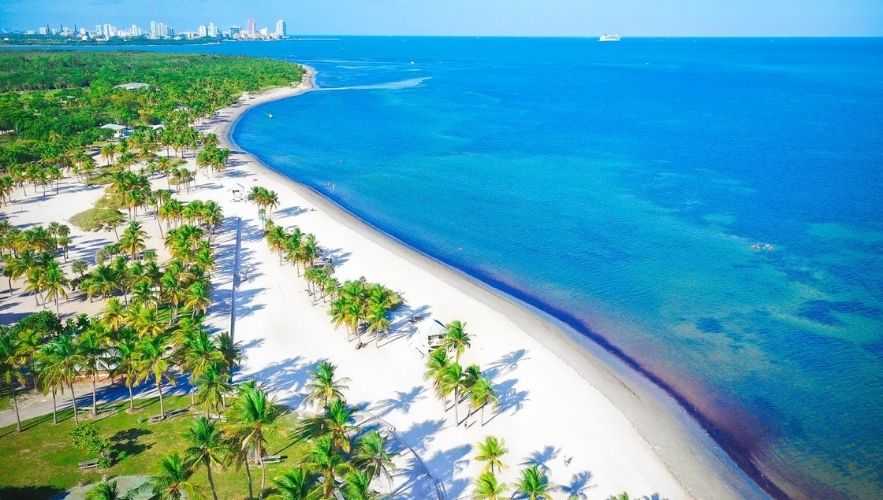
Checking Wind Direction
Wind direction tells you how you’ll plan your entire sail. Remember:
Wind direction is named for where the wind is coming FROM.
For Biscayne Bay:
- E/SE winds are most common
- N/NW winds usually follow cold fronts
- SW winds can indicate weather changes or storm buildups
Use wind forecasts such as:
- NOAA Marine Forecast: https://www.weather.gov/marine/
- Windy.com
- SailFlow
Understanding Wind Speed
Typical Biscayne Bay conditions:
- 0–6 knots: Light air
- 7–12 knots: Perfect for beginners
- 13–18 knots: More advanced, choppy waters
- 18+ knots: For experienced sailors only
- 25+ knots: Unsafe for most recreational sailing
When learning wind reading for sailing, the trick is to match your skill level and vessel type with the current wind conditions.
The Basics of Wind Reading While Sailing
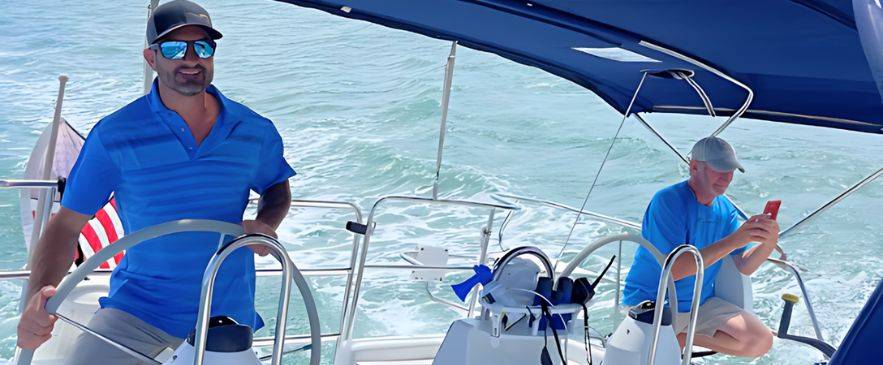
1. Observe the Water Surface
Water tells the truth — much more than a forecast can.
- Glass calm: Light or no wind
- Small ripples: 5–8 knots
- Small wavelets with texture: 10–14 knots
- Whitecaps: 15+ knots
The Bay’s shallow water can make whitecaps appear earlier than in deeper ocean waters.
3. Watch Other Boats
Other vessels can help you read:
- Wind direction changes
- Gust patterns
- Calm patches on the water
- Optimal sail trim
Experienced sailors often scan surrounding boats before adjusting their own sails.
4. Read Cloud Formations
Clouds are excellent early-warning tools.
- Cumulus clouds: fair weather
- Darkening cumulus: possible storms
- Nimbus clouds: rain likely
- Towering cumulonimbus: thunderstorms approaching
Since Biscayne Bay’s weather changes quickly, cloud awareness is essential.
How to Use Weather Tools Effectively
Wind Forecast Apps
Reliable sources for Miami sailing weather:
- NOAA
- Windy
- SailFlow
- PredictWind
- National Data Buoy Center: https://www.ndbc.noaa.gov/
These apps show:
- Wind direction and speed
- Gusts
- Pressure systems
- Wave height
- Storm activity
Radar Scans
Check radar before you leave the marina. A clear radar does not guarantee perfect conditions, but it helps identify:
- Nearby thunderstorms
- Fast-moving rain cells
- Tropical disturbances
Radar is especially important in summer months.
Marine Watches & Warnings
Always pay attention to:
- Small Craft Advisory
- Gale Warning
- Special Marine Warning
- Thunderstorm Warning
These advisories are issued by the National Weather Service and should never be ignored.
Seasonal Guide to Biscayne Bay Weather for Sailors
Winter (Dec–Feb)
- Best sailing season
- NW winds after fronts
- Dry air and steady breezes
Great for: Skill-building and longer sails.
Spring (Mar–May)
- Moderate winds
- Afternoon sea breezes
- Occasional fronts
Great for: Practicing tacking, reading oscillating winds.
Summer (Jun–Sep)
- Light morning winds
- Strong sea breeze afternoons
- Frequent thunderstorms
Great for: Early morning sailing before storms.
Fall (Oct–Nov)
- Transition season
- Tropical activity possible
- Increasing cold front frequency
Great for: Versatile sailing with mixed wind conditions.
Practical Tips for Reading Weather Before You Cast Off
1. Use the “Three-Source Rule”
Never rely on a single forecast. Compare:
- NOAA
- Windy
- A buoy station or marine app
If all three agree → reliable pattern
If they conflict → conditions may change quickly
2. Check the Forecast at Least 48 Hours Out
Patterns often show themselves early:
- Strengthening winds
- Storm systems developing
- Pressure changes
Two days of observation helps you spot trends.
3. Always Look at Gust Strength
If forecast is:
- 12 knots wind
- 20 knots gusts
Plan for 20 — gusts can overwhelm a beginner or improperly trimmed sails.
4. Know Your Limits
Beginner sailors:
- Sail in 10–14 knots, minimal gusts
Intermediate sailors:
- 14–18 knots with moderate gusts
Advanced sailors:
- Over 20 knots depending on experience & vessel
5. Make a Go/No-Go Decision
Ask yourself:
- Is the weather stable?
- Are winds appropriate for my skill level?
- Are storms forming nearby?
- Do I have a backup plan?
If any answer feels uncertain, choose caution.
How Biscayne Bay’s Geography Impacts Wind
Biscayne Bay isn’t a uniform body of water. Conditions vary by location.
North Bay
- More gusts due to buildings
- Narrower sailing space
- Busier waterway
Central Bay
- Largest open-water area
- Best for consistent wind
- Most training courses held here
South Bay
- Shallow flats
- Stronger afternoon winds near the cuts
- More sensitive to tide changes
Understanding these patterns makes wind reading for sailing more intuitive.
Why Wind Awareness Improves Your Sailing Skills
Knowing how to interpret Miami sailing weather transforms your time on the water:
- You’ll trim sails more effectively
- Your maneuvers become smoother
- You’ll reduce unnecessary heeling
- Tacking and jibing feel easier
- Navigation becomes more efficient
- You stay safer
Most importantly, you learn to feel the wind — a skill that separates cautious beginners from confident sailors.
Advancing Your Weather & Wind Skills at Miami Sailing School™
Miami Sailing School™’s courses are designed to help sailors build real-world skills, including:
- Wind interpretation
- Weather reading
- Sail control
- Local navigation techniques
- Safety and storm avoidance
Through hands-on practice on Biscayne Bay, students learn to anticipate wind shifts, adjust trim, and make better decisions on the water.
Additional Resources
How to Read Wind & Weather Before Sailing in Biscayne Bay FAQs
The safest approach is to use multiple sources, including NOAA marine forecasts, radar scans, and dedicated wind apps like Windy or SailFlow. Because Biscayne Bay weather can shift quickly, Miami Sailing School™ teaches sailors to compare at least three forecasts before making a go/no-go decision.
Start by observing surface patterns on the water, watching tell-tales, and paying attention to nearby sailboats. These real-time visual cues help sailors understand shifts and gusts better than apps alone. Miami Sailing School™ incorporates hands-on wind reading drills in every course to help students build instincts quickly.
Most beginners do best in 7–12 knots with light gusts. Conditions above 15 knots become choppy due to Biscayne Bay’s shallow depth and can overwhelm new sailors. Miami Sailing School™ ensures beginners train in safe, controlled conditions while learning how to interpret wind speed and gust strength.
Afternoon thunderstorms, sea breezes, and tropical systems can create sudden wind shifts, reduced visibility, and dangerous gusts. Even experienced sailors must monitor radar and storm alerts closely. Miami Sailing School™ emphasizes storm awareness, cloud interpretation, and early-warning signs as core safety skills in every course.