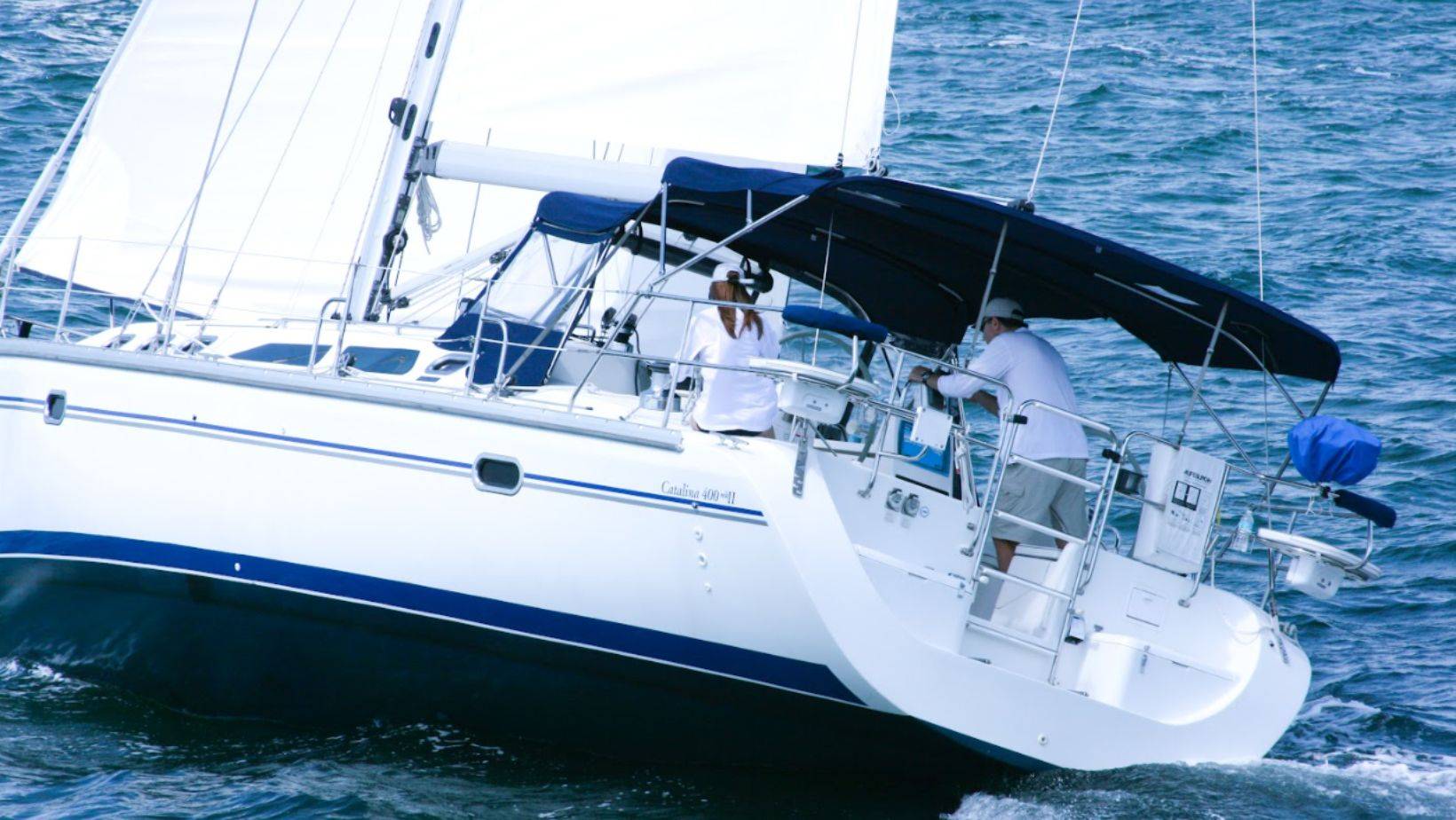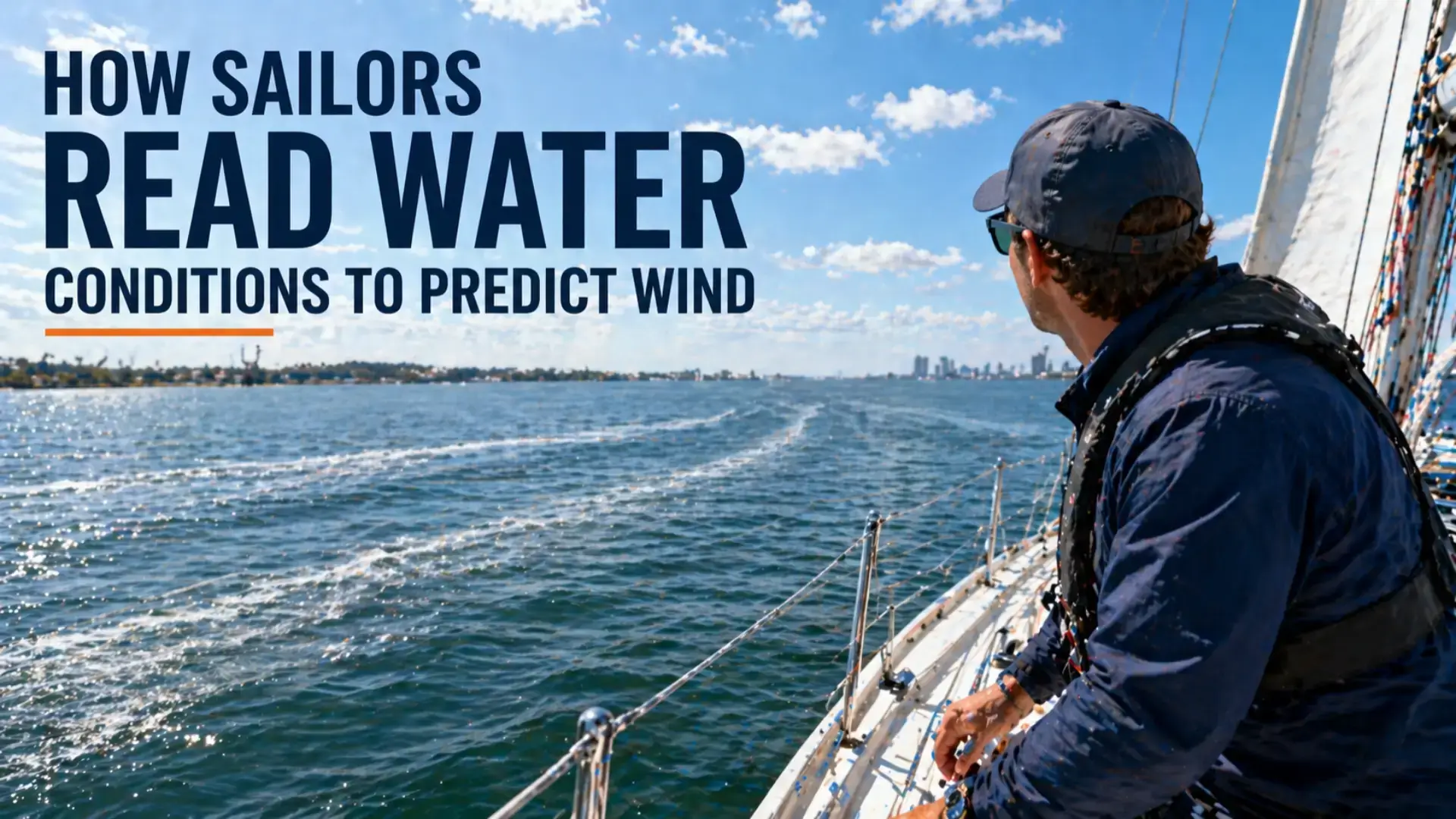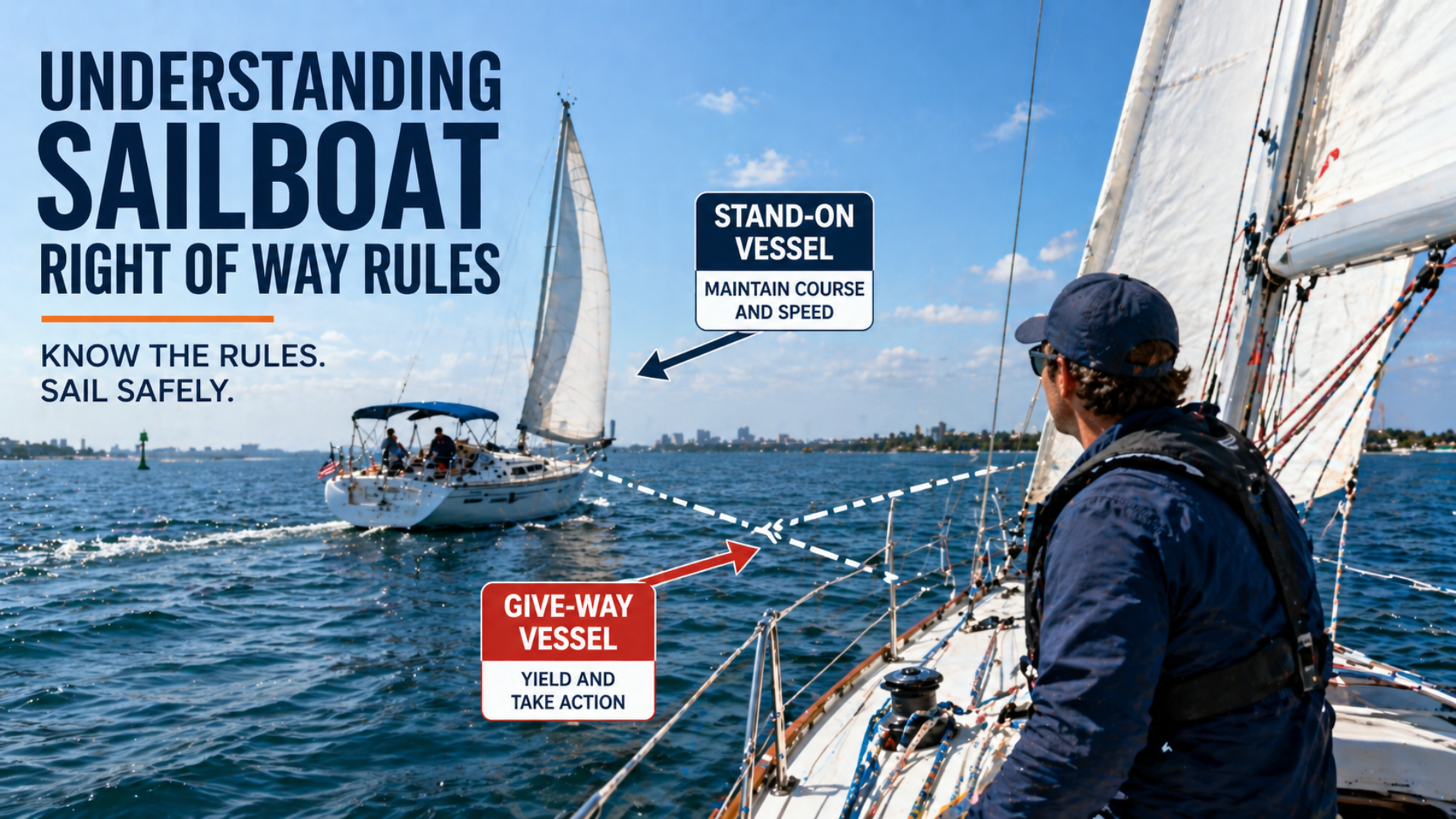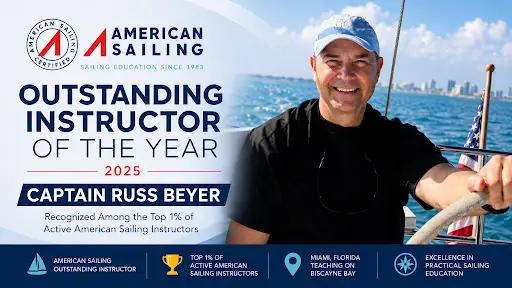


For sailing schools operating in South Florida, Biscayne Bay functions as a natural classroom where students can practice sail handling, boat control, and navigation in real conditions while remaining within a relatively protected coastal area. Training programs such as those offered by Miami Sailing School™ are designed around these conditions, allowing students to progress through structured sailing instruction aligned with standards established by the American Sailing Association.
Whether a student is beginning with introductory sailing courses or continuing toward advanced cruising skills, Biscayne Bay provides a balanced environment that supports both safety and skill development.
Protected Geography Creates a Safer Learning Environment
One of the most important advantages of Biscayne Bay is its protected geographic layout. The bay is partially shielded from the open Atlantic Ocean by barrier islands, reefs, and the Florida Keys. This protection reduces the size of ocean swells and creates calmer water conditions compared with offshore sailing areas.
Reduced Wave Activity
Because the bay has limited fetch, large ocean waves rarely develop. This calmer water environment allows students to focus on sailing fundamentals such as steering control, sail trim, and points of sail without the added challenge of heavy ocean swell.
These conditions make it easier for new sailors to gain confidence while learning how wind interacts with the sails and how small steering adjustments affect the boat’s movement.
Shallow Water Areas
Much of Biscayne Bay consists of relatively shallow water. While sailors must still navigate carefully around sandbars and marked channels, these depths can provide an added level of safety during training sessions. Minor groundings in shallow areas are typically manageable compared with the risks associated with deeper offshore waters.
For students learning boat handling techniques, this environment provides a controlled setting that supports practical learning.
Convenient Access From Miami Marinas
The bay’s proximity to Miami allows sailing schools to reach open sailing water quickly. This accessibility minimizes transit time and allows students to spend more time practicing sailing skills rather than traveling long distances to reach training areas.
Consistent Wind Patterns Support Skill Development
Another major reason Biscayne Bay is ideal for sailing instruction is its predictable wind patterns. The region commonly experiences reliable sea breezes, particularly during the afternoon.
Reliable Afternoon Breezes
Sea breezes in Biscayne Bay often reach moderate speeds that allow sailboats to move efficiently without creating overly challenging conditions. These winds provide an excellent environment for students learning sail trim, steering coordination, and sail balance.
Moderate wind speeds also allow instructors to demonstrate how sail adjustments influence boat speed and direction.
Exposure to Varying Conditions
While the winds are often predictable, Biscayne Bay still provides enough variation for students to experience different sailing scenarios. Morning conditions may be lighter and ideal for beginners, while stronger afternoon winds offer opportunities for practicing sail reduction techniques and responsive boat handling.
Experiencing a range of wind conditions helps sailors develop adaptability and confidence.
A Practical Environment for Navigation and Seamanship
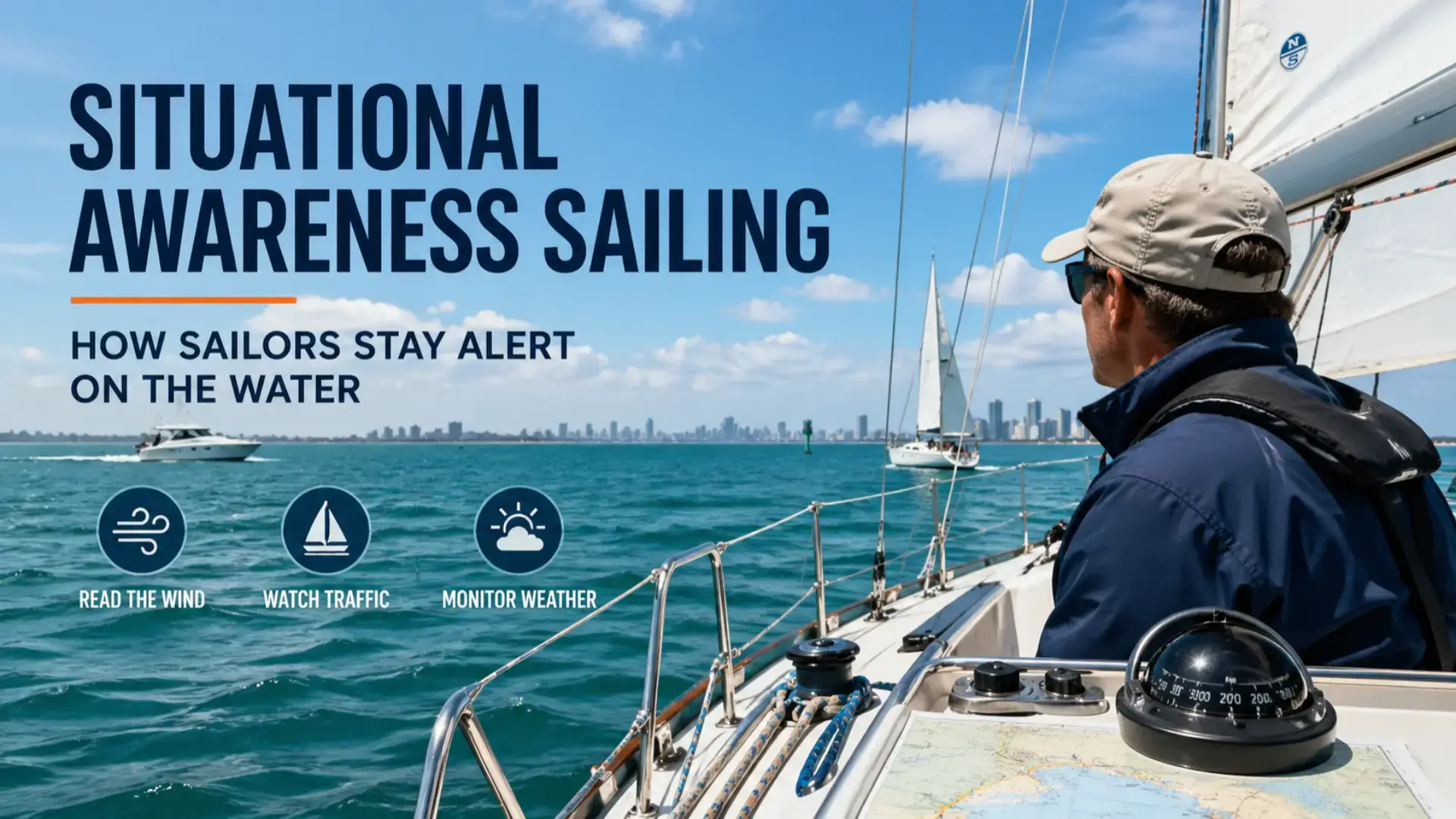
Beyond wind and water conditions, Biscayne Bay also offers an environment rich in navigation opportunities. The bay contains numerous channels, navigation markers, and coastal landmarks that help sailors develop situational awareness and practical navigation skills.
Aids to Navigation
Students practicing in Biscayne Bay encounter buoys, day markers, and channel indicators that are commonly used in coastal navigation. Learning how to identify and interpret these markers is an essential part of sailing education.
These navigation aids allow students to apply chart reading and navigation principles in real-world conditions.
Access to Coastal Passages
For more advanced sailing students, nearby inlets provide access to offshore waters. Locations such as Government Cut allow sailors to transition between protected bay sailing and open ocean conditions.
This access allows sailing programs to gradually introduce students to more complex sailing environments as their skills progress.
Real-World Sailing Scenarios
Because Biscayne Bay supports both recreational boating and sailing activity, students gain experience navigating shared waterways. This environment encourages the development of awareness, communication, and safe vessel handling.
These real-world scenarios strengthen seamanship skills that are essential for responsible sailing.
Year-Round Sailing Opportunities
Miami’s climate allows sailing instruction to continue throughout the year. Warm temperatures and consistent wind patterns make Biscayne Bay accessible during every season.
Continuous Skill Development
Unlike many sailing regions that experience winter closures, South Florida’s climate allows sailors to train consistently. Regular practice is essential for reinforcing sailing techniques and maintaining confidence on the water.
Students who train in year-round sailing environments can progress more steadily through skill development programs.
Consistent Training Conditions
The ability to sail throughout the year also allows instructors to structure lessons more effectively. Students can build upon previous experiences without long seasonal interruptions.
This continuity supports long-term learning and allows sailing programs to maintain a steady progression of skills.
An Inspiring Environment for Learning
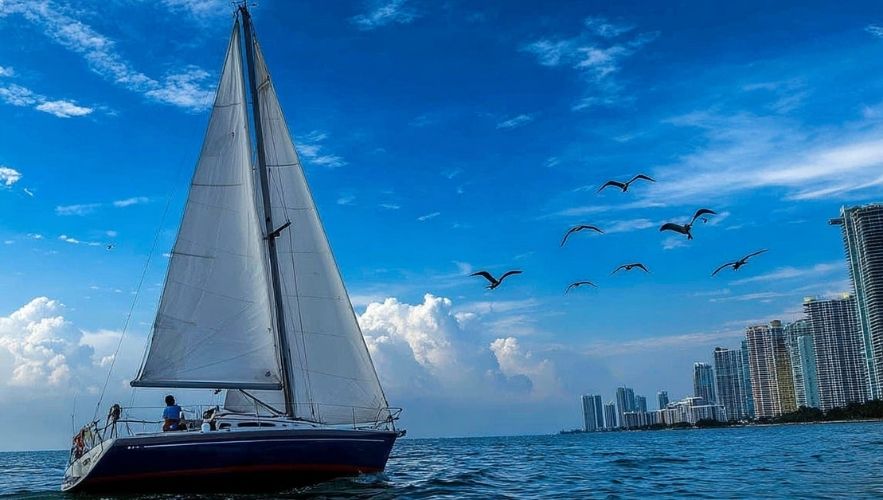
In addition to its practical advantages, Biscayne Bay offers a visually striking sailing environment. Clear water, coastal islands, and views of Miami’s skyline create a memorable setting for sailing instruction.
Scenic surroundings can make the learning experience more engaging and encourage students to spend more time developing their sailing abilities.
For many sailors, their early experiences on Biscayne Bay become the foundation for a lifelong interest in sailing and maritime exploration.
Miami Sailing School™ and Biscayne Bay Sailing Education
Miami Sailing School™ continues to use Biscayne Bay as a primary training environment because of the unique advantages the bay provides for sailing instruction. By combining structured sailing education with real-world practice on the water, students gain both theoretical knowledge and hands-on experience.
Training programs aligned with the standards of the American Sailing Association help students build confidence while developing the skills needed to operate sailing vessels safely and effectively.
For sailors learning in South Florida, Biscayne Bay remains one of the most valuable environments for developing practical sailing knowledge and seamanship.
Additional Resources
Biscayne Bay Sailing FAQs
Because of heat, salt, and humidity, key systems should be checked monthly, with deeper inspections performed seasonally. Miami Sailing School™ teaches owners how to create a customized maintenance schedule.
Rinsing and removing salt is one of the most crucial tasks. Saltwater accelerates corrosion and damage. At Miami Sailing School™, rinsing routines are taught as a core safety habit.
Reinforce dock lines, install chafe gear, remove sails, secure loose items, and follow marina guidelines. Miami Sailing School™ covers storm preparation techniques in advanced seamanship modules.
Yes. Proper sailboat maintenance extends equipment life and improves safety. Miami Sailing School™ offers hands-on maintenance training to help new owners understand essential tasks.