

How Sailors Read Water Conditions to Predict Wind Changes
Experienced sailors often rely on visual clues from the water to anticipate changes in wind conditions. While wind itself cannot always be seen directly, its interaction with the water’s surface creates patterns that reveal important information about its strength and direction. Learning how to recognize these patterns is a valuable seamanship skill that helps sailors respond earlier to changing conditions.
The ability to read the water allows sailors to anticipate wind shifts, prepare sail adjustments, and maintain better control of the vessel. Instead of reacting after the wind has already changed, experienced sailors observe the water continuously and use those observations to make proactive decisions while sailing.
Understanding How Wind Affects the Water Surface
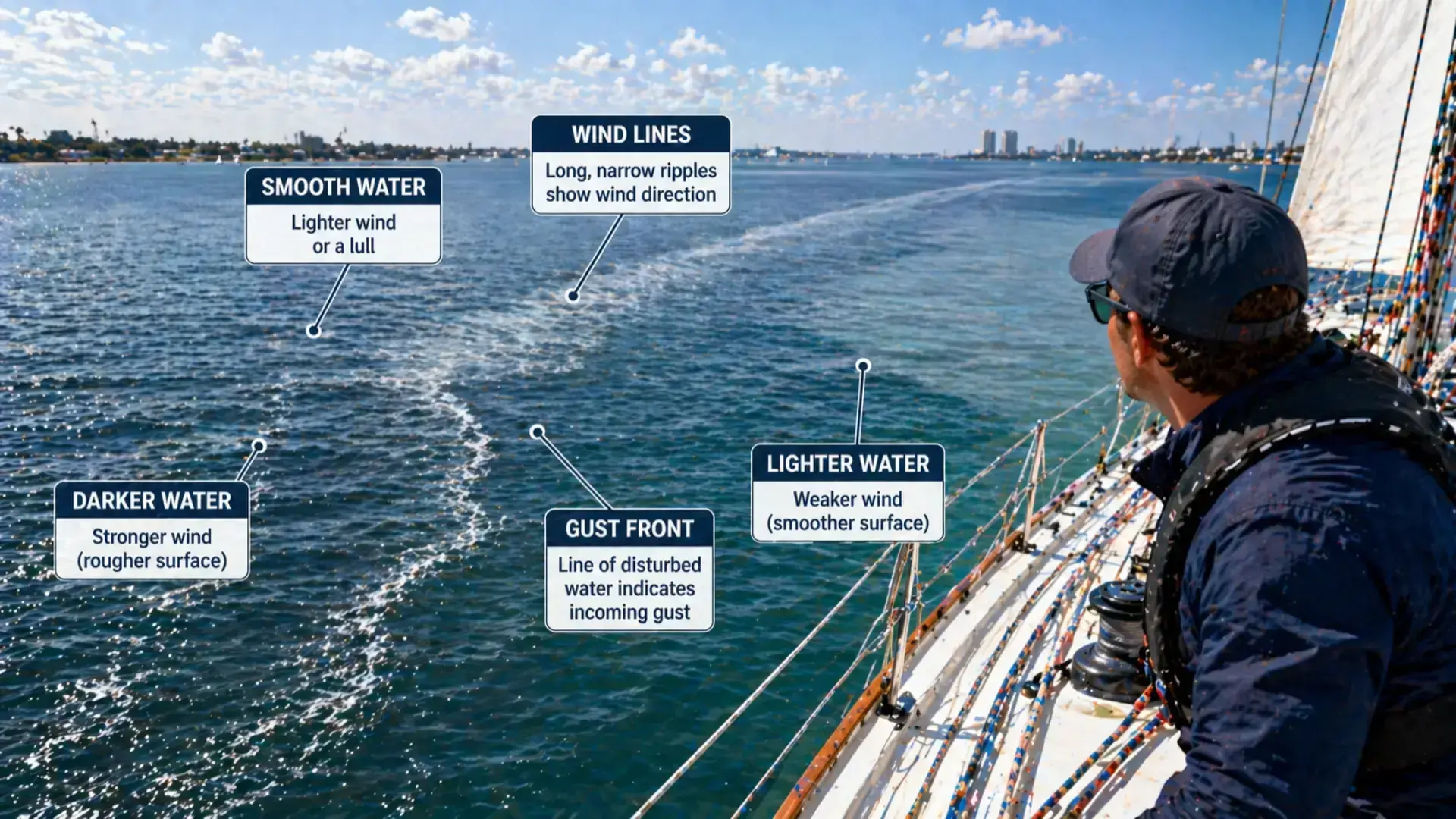
Wind creates friction across the surface of the water, producing ripples and small waves that vary depending on wind strength. As wind increases, these ripples become more pronounced and create a rougher water texture. In lighter winds, the water surface often appears smoother with fewer disturbances.
Sailors pay close attention to these variations because they provide clues about how the wind is behaving across the sailing area. Even subtle differences in surface texture can indicate that stronger or weaker wind is approaching.
By observing these patterns early, sailors can anticipate how wind conditions may affect the boat and prepare adjustments to sails or course.
Identifying Wind Patches and Gusts
One of the most recognizable visual indicators of changing wind is the appearance of darker patches moving across the water. These darker areas are often referred to as wind patches and are caused by increased wind pressure on the water’s surface.
As wind patches move toward the boat, they signal that a gust of stronger wind may soon arrive. Experienced sailors monitor the direction and movement of these patches to anticipate when the wind will reach their vessel.
Preparing for these gusts allows sailors to adjust sails gradually instead of reacting suddenly when the wind increases.
Observing Wind Direction Through Water Movement
Changes in wind direction can also be detected by watching how ripples move across the water. When the wind shifts, the angle of the ripples often changes as well. Sailors who regularly observe these movements develop an understanding of how wind direction influences water patterns.
This awareness helps sailors anticipate when the wind may shift enough to require a change in sailing course or sail trim.
Combining Water Observation With Other Environmental Clues
Reading the water is only one part of understanding wind behavior. Sailors often combine this observation with other environmental cues such as cloud movement, nearby boats, and shoreline indicators.
Flags on nearby vessels, the movement of tree branches along the shore, and the angle of sails on other boats can all provide additional information about wind direction and strength.
By combining multiple visual cues, sailors develop a clearer picture of how wind is behaving across the sailing area.
Developing the Skill Through Experience
Like many aspects of sailing, reading the water becomes easier with practice. The more time sailors spend observing wind patterns and water texture, the more familiar these patterns become.
Sailing instruction often encourages students to regularly observe their surroundings while underway. Over time, sailors begin to recognize the visual indicators that signal changes in wind behavior.
Developing this awareness improves both safety and sailing performance. Sailors who can anticipate wind shifts are better prepared to adjust sails, maintain balance, and navigate confidently in changing conditions.